
Social Media Day 2025: Connection or Addiction?
June 30 is being observed globally as Social Media Day. The day was first celebrated in 2010 by the American news platform Mashable, with the goal of recognizing the impact and relevance of internet-based social platforms. In 2025, this day is no longer just about celebration—it also raises a critical question: Are we truly connecting, […]

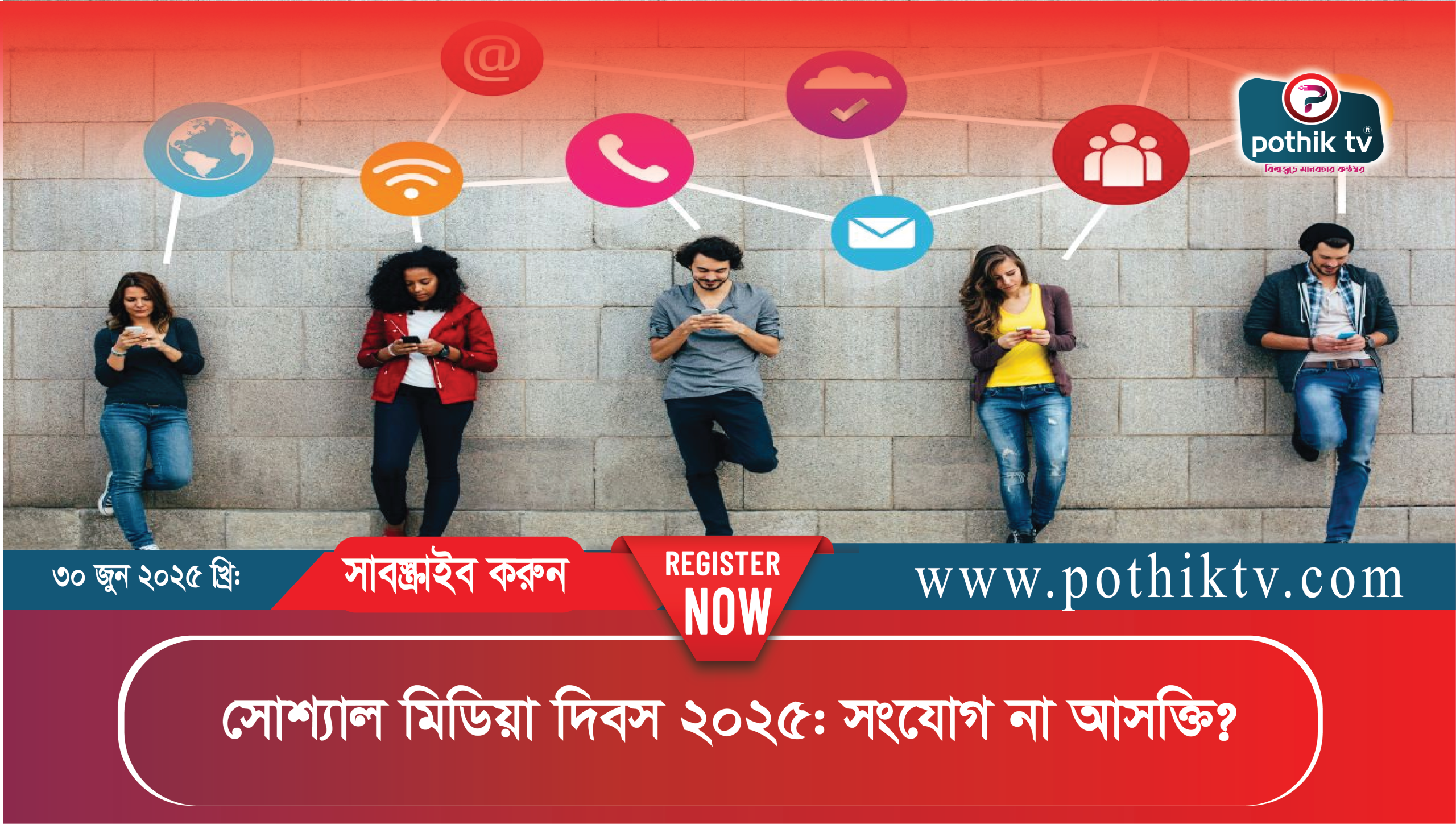
June 30 is being observed globally as Social Media Day. The day was first celebrated in 2010 by the American news platform Mashable, with the goal of recognizing the impact and relevance of internet-based social platforms. In 2025, this day is no longer just about celebration—it also raises a critical question: Are we truly connecting, or are we becoming addicted?
The Rise of Social Media: A New Era of Connection
Social media has brought the world to our fingertips. Platforms like Facebook, Twitter (now X), Instagram, YouTube, TikTok, LinkedIn, and WhatsApp have not only made global communication easier but have also revolutionized information sharing, free speech, business, journalism, and activism. During the COVID-19 pandemic, these platforms became even more vital, keeping people connected while physically isolated.
On average, people now spend about 2 hours and 30 minutes on social media daily—this number is even higher in South Asian countries. In Bangladesh, for example, the average time surpasses 3 hours. This time isn’t just spent communicating; social media now plays a central role in entertainment, news, learning, and even shopping.

Falling into the Abyss of Addiction
However, amid this connectivity arises a concerning question—are we controlling technology, or is technology controlling us? Numerous studies have shown that excessive use of social media can lead to stress, lack of self-esteem, depression, sleep disorders, reduced productivity, and strained relationships.
Experts describe this pattern as the dopamine loop—a new notification, like, or share triggers the brain’s reward system, prompting us to keep checking again and again. Over time, what starts as a social habit slowly transforms into an addiction.
The World Health Organization (WHO) has already issued warnings about “digital addiction.” Individuals between the ages of 18 to 35 are the most vulnerable, often facing distractions at work, academic decline, and weakened family bonds.
Misinformation and Privacy Breaches
Social media allows information to spread instantly—but the problem is that much of it is false or unverified. A 2020 study revealed that fake news spreads six times faster than the truth on social media. This misinformation can lead to confusion, panic, and even violence.
Another significant concern is privacy. Users, often unknowingly, share a large amount of personal data with these platforms, which is then sold to advertisers. User preferences, movements, and even conversations are analyzed to show targeted content. This not only violates privacy but also makes it easier to manipulate people’s behavior.
Digital Health and Balance: A Timely Need
It is now more important than ever to focus on digital health and digital hygiene. Digital health means using social media and technology in a way that enriches—rather than harms—our mental, social, and physical well-being.
Experts recommend a few strategies:
- Set Screen Time Limits: Avoid using social media beyond a specific daily limit.
- Practice Digital Detox: Designate one day a week or a few days each month to disconnect completely from technology.
- Control Notifications: Turn off unnecessary alerts to improve focus.
- Ensure Quality Sleep and Exercise: Avoid screens before bedtime and maintain physical activity.
- Choose Positive Content: Steer clear of depressing or negative content that affects mental health.

The Way Forward: Mindful Usage
Social media is now an inseparable part of life. It cannot—and need not—be abandoned. What we need instead is mindful and balanced usage. Let technology empower us, not overpower us. Let us use these platforms to understand others, express our thoughts, and build a better society.
On this Social Media Day, let’s not just celebrate these platforms but also reflect on how we use them. Connection is powerful—but when it starts disconnecting us from real life, it becomes addiction.
So, in 2025, the question still stands:
Are we using social media, or is social media using us?
Technology is never the enemy—if we know how to use it right. So, let’s take a pledge this Social Media Day:
Let’s stay connected, but with control.